
News
Find out more about our studies here.
Find out more about our studies here.

The entire team at the Population Epidemiology Unit wishes you a pleasant summer and would like to inform you that the unit will be closed from Monday 28 July to Sunday 10 August 2025.

Climate and environmental issues in Geneva: perceptions and links with mental health, Nature npj Climate Action, 2026
In Geneva, more than three out of four people say they are alarmed or concerned about climate change. Eco-anxiety is more common among women, people with higher education qualifications and in certain areas of the city centre, and is associated with more anxiety and depressive symptoms. These results call for a better link between climate issues and mental health.

The 'Mobility' 2025 questionnaire seeks to understand how the people of Geneva get around and how these habits influence their health and well-being. By answering the questionnaire, everyone can help to identify the most commonly used modes of transport, the obstacles encountered, development needs and any inequalities between regions. The responses will also be used to monitor trends in relation to 2024. It only takes a few minutes to help improve mobility and health in Geneva.
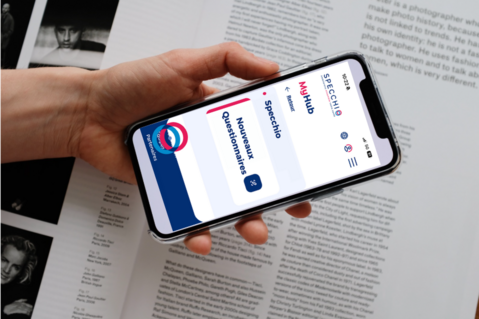
The 'Mobility' 2025 questionnaire seeks to understand how the people of Geneva get around and how these habits influence their health and well-being. By answering the questionnaire, everyone can help to identify the most commonly used modes of transport, the obstacles encountered, development needs and any inequalities between regions. The responses will also be used to monitor trends in relation to 2024. It only takes a few minutes to help improve mobility and health in Geneva.

The 'Mobility' 2025 questionnaire seeks to understand how the people of Geneva get around and how these habits influence their health and well-being. By answering the questionnaire, everyone can help to identify the most commonly used modes of transport, the obstacles encountered, development needs and any inequalities between regions. The responses will also be used to monitor trends in relation to 2024. It only takes a few minutes to help improve mobility and health in Geneva.

The 'Mobility' 2025 questionnaire seeks to understand how the people of Geneva get around and how these habits influence their health and well-being. By answering the questionnaire, everyone can help to identify the most commonly used modes of transport, the obstacles encountered, development needs and any inequalities between regions. The responses will also be used to monitor trends in relation to 2024. It only takes a few minutes to help improve mobility and health in Geneva.

The 'Mobility' 2025 questionnaire seeks to understand how the people of Geneva get around and how these habits influence their health and well-being. By answering the questionnaire, everyone can help to identify the most commonly used modes of transport, the obstacles encountered, development needs and any inequalities between regions. The responses will also be used to monitor trends in relation to 2024. It only takes a few minutes to help improve mobility and health in Geneva.

The 'Mobility' 2025 questionnaire seeks to understand how the people of Geneva get around and how these habits influence their health and well-being. By answering the questionnaire, everyone can help to identify the most commonly used modes of transport, the obstacles encountered, development needs and any inequalities between regions. The responses will also be used to monitor trends in relation to 2024. It only takes a few minutes to help improve mobility and health in Geneva.

The 'Mobility' 2025 questionnaire seeks to understand how the people of Geneva get around and how these habits influence their health and well-being. By answering the questionnaire, everyone can help to identify the most commonly used modes of transport, the obstacles encountered, development needs and any inequalities between regions. The responses will also be used to monitor trends in relation to 2024. It only takes a few minutes to help improve mobility and health in Geneva.

200 people attended the Specchio webinar on 14 January 2026. The webinar was hosted by Dr Mayssam Nehme and Professor Idris Guessous, principal investigators of the study. Recent results were presented along with a demonstration of the use of our new Zoom In data visualisation tool. You can watch or replay the Specchio webinar in this article. You will also find our answers to the questions that were asked.

By completing the Specchio 65+ questionnaire, you are helping to improve our understanding of health, quality of life and social ties as we age. Your answers will support the development of actions to promote healthy ageing.

In fourteen years, the proportion of the population who forego healthcare for financial reasons has risen from 16% to almost 26%. Long concentrated among the most vulnerable, this phenomenon is now also affecting middle- and high-income households. This is a worrying development, closely linked to the continuing rise in health insurance premiums, and has major consequences for public health.
Find out all the results in our article.